Big Bear Vegetation Management | Property Line Care
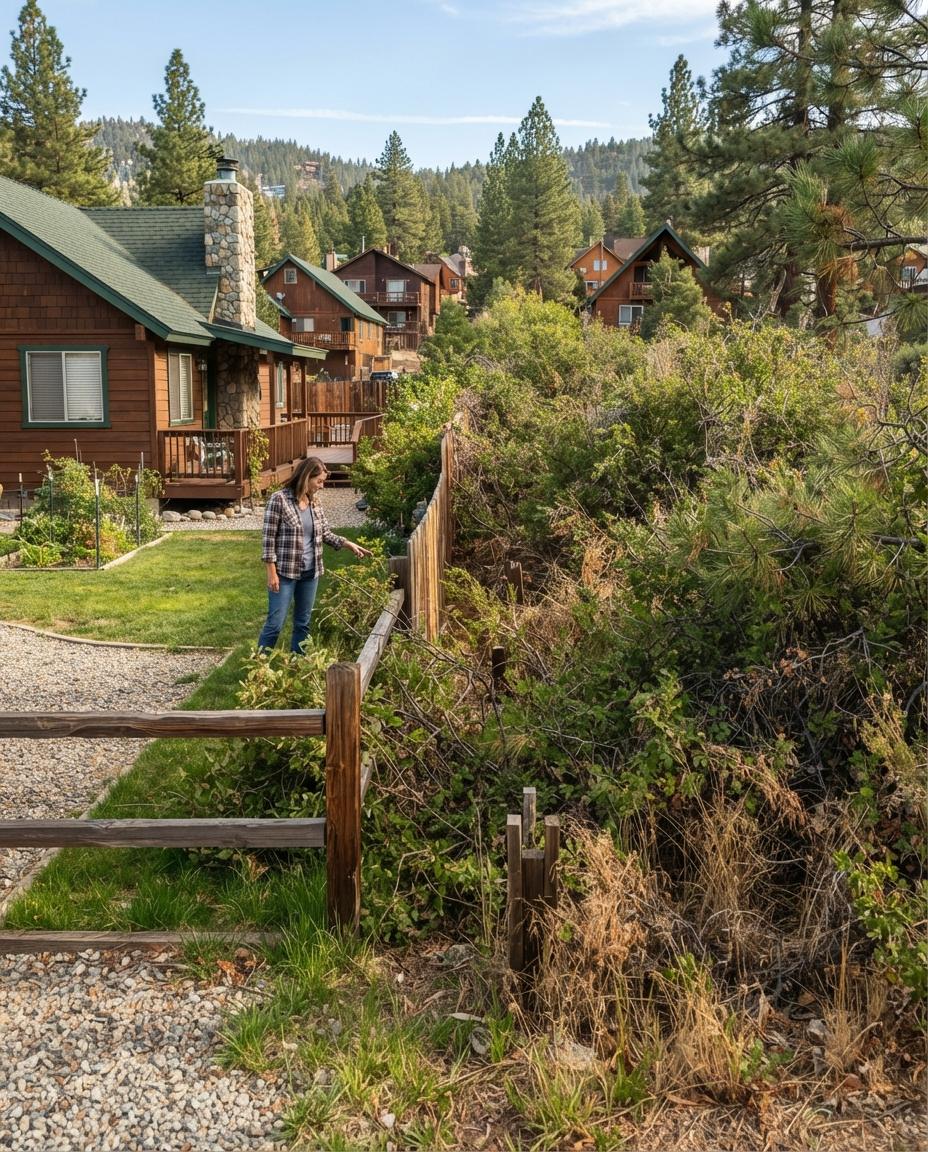
Look Down the Property Line
Dense vegetation can spread into areas you may not realize need attention.
When you think about maintaining your Big Bear property, it's easy to focus on the areas you see most often—the front yard, driveway, patio, or space around your cabin.
But what about the property line?
Fences, boundaries, side yards, slopes, and less-traveled areas can gradually become crowded with unwanted vegetation. Because these areas aren't always part of your daily routine, growth can go unnoticed until it becomes much more difficult to manage.
That's why checking the edges of your property should be part of your regular Big Bear vegetation management routine.
Your Property Doesn't End at the Front Door
A well-maintained property involves more than the areas immediately surrounding your home.
Vegetation can gradually extend along:
🌿 Fences and property boundaries
🌲 Areas between trees and structures
🏡 Side yards and back portions of the property
🚗 Driveway edges and access areas
⛰️ Sloped or uneven terrain
🍂 Less frequently used sections of the yard
These locations may not receive the same attention as your main outdoor spaces, allowing dense growth to develop over time.
Taking a walk around the entire property can help you identify areas that deserve a closer look.
Why Property Boundaries Can Be Easy to Overlook
Property-line areas often aren't part of your everyday view.
You may enter through the driveway, spend time around the cabin, and rarely walk along the far side of the property. Meanwhile, vegetation can continue growing and spreading into surrounding spaces.
This is especially common with mountain properties where natural vegetation is already part of the landscape.
A quick inspection along your property boundaries can reveal growth that isn't obvious from the main living areas.
Look Beyond What You See Every Day
When inspecting your Big Bear property, don't stop at the places guests or family members typically use.
Walk the perimeter when conditions allow and look for areas where vegetation has become:
Dense or difficult to pass through
Crowded around fences
Growing toward structures
Extending across walkways or access areas
Accumulating alongside other natural debris
Difficult to maintain with normal yard care
You don't necessarily need to address everything at once. The first step is simply knowing what's there.
A Fall Property Walk Can Reveal More
October is a useful time to take a closer look at your property's boundaries.
As the seasons change, some vegetation becomes easier to identify while other areas may become covered by fallen leaves or natural debris.
A fall property walk gives homeowners an opportunity to document areas that may need attention before winter and create a maintenance plan for the months ahead.
For Big Bear cabin owners and vacation rental properties, this can be particularly helpful when you're managing the property between visits.
Don't Forget About Hard-to-Reach Areas
Some of the most overlooked areas of a property are also the most difficult to access.
Slopes, narrow spaces, fence lines, and areas behind structures may require additional attention because they aren't easy to reach with routine yard maintenance.
If you notice vegetation becoming particularly dense in these locations, consider having the area assessed rather than allowing it to remain unchecked.
Professional vegetation-management services can help property owners determine what type of maintenance may be appropriate for specific areas.
Keep Your Big Bear Property More Manageable
Regular property inspections can make maintenance easier to plan.
Instead of discovering dense vegetation after it has become a major cleanup project, you can identify areas earlier and decide what needs attention.
This can help create a more organized approach to:
🌲 Seasonal property maintenance
🌿 Vegetation management
🏡 Cabin upkeep
🚗 Access-area maintenance
🍂 Fall cleanup planning
For second-home owners and vacation rental hosts, having a clear understanding of the property's condition can also make remote property management easier.
Take a Walk Around the Whole Property
The next time you're at your Big Bear cabin, don't just look at the house.
Look down the property line.
Check the corners. Walk the fence. Look behind the structures. Examine areas that aren't part of your normal routine.
You may discover vegetation that has quietly become much denser than you realized.
Identifying those areas is the first step toward deciding what maintenance they may need.
Final Thoughts
Your Big Bear property has more to maintain than what you can see from the front door.
Dense vegetation can gradually spread along property boundaries, fences, slopes, and less-visible areas. A simple walk around the perimeter can help you identify growth that may otherwise go unnoticed.